

I’ve always been interested in casino games that break the mold, and Chicken Road does precisely that. This crash-style game replaces spinning reels for a high-stakes dash across a busy highway, where every second counts. I love how it merges simple rules with heart-pounding tension, and the fact that it runs smoothly on mobile devices makes it a ideal option for on-the-go play. If you’ve never tried a crash game before, Chicken Road is the ideal place to start.
Chicken Road Game at a Glance
Game Category and Provider
Chicken Road is a crash game developed by Gaming Corps, a Swedish studio known for blending arcade action with gambling mechanics. Unlike traditional slots, there are no paylines or reels. Instead, you watch a plucky chicken attempt to cross a road while cars zoom past. The game’s outcome relies entirely on when you choose to cash out before a collision occurs. This fast-paced format has made it a notable title in the growing crash game category, and I find its simplicity addictive.
Key Numbers
The return to player (RTP) typically sits at 97%, which is comfortably above the industry average for online casino games. The maximum multiplier can reach a staggering 5,000x your stake, turning even a modest bet into a serious win. You can wager as little as 0.10 or as much as 100 per round, though exact limits may vary by platform. I always recommend looking at the in-game info panel for the precise RTP and bet range before you start playing.
Gambling Selections, Dual Bets, and Betting Caps
One of the smartest features is the twin stake system. You can place two distinct stakes per round, each with its own cashout button. I appreciate using this to balance risk, setting auto cashout at 1.5x for one bet to secure a small profit, while letting the second bet to run for a potential 10x or higher.
Betting caps are flexible, from 0.10 to 100 per round. On mobile, adjusting your bet is simple with plus and minus buttons. I often start with the minimum on both bets to grasp for the rhythm, then gradually increase once I’m comfortable.
The twin stake system opens innovative tactics. You can auto cashout one bet at a low multiplier for consistent gains, and personally oversee the second for a big payout. This lessens the impact of consecutive crashes because you still collect a small win. It’s a clever way to extend playtime and control variance.

Playing on Mobile: How Chicken Road Works on Mobile Devices
I’ve tested Chicken Road on various smartphones, and it’s consistently smooth. Developed with HTML5, it runs in mobile browsers without an app. On iPhone or Android, visuals are crisp, movement fluid, and touch controls work instantly. The interface adapts to fit the screen perfectly.
The layout is crafted for one-thumb play. The cashout button is big and located where your thumb rests, making split-second taps easy. Bet adjustment and auto cashout settings are available. I value that it functions in portrait or landscape, and it saves my preferences between sessions.
Performance on 4G is outstanding, with no lag or disconnections. Graphics are colourful but light, so older phones run it well. Battery consumption is moderate — I can play for an hour without draining much charge. This reliability makes it my go-to for commutes or queues.
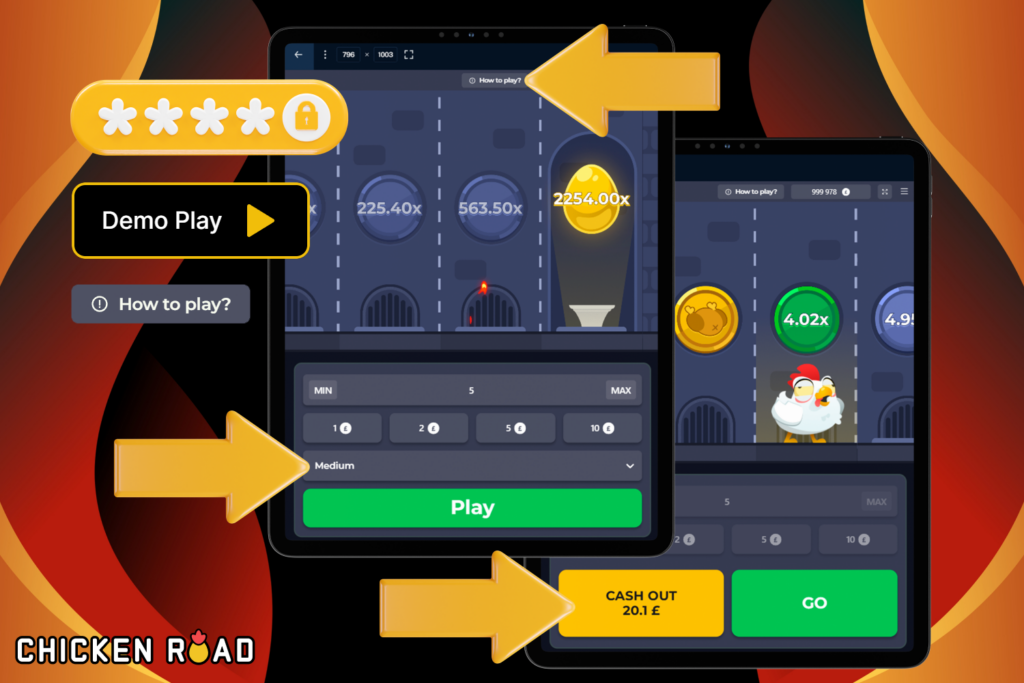
The audio design on mobile is just as impressive. Crisp sound effects for the chicken’s footsteps and car horns contribute to the immersion, and you can easily mute them with a single tap if you choose to play silently. I often keep the sound on low to stay alert for the crash warning.
What Distinguishes Chicken Road Unique from Traditional Slots
If you’re used to reels and paylines, Chicken Road feels completely different. There are https://www.reddit.com/r/GlobalOffensive/comments/18cy350/whatre_your_best_strat_roulette_strats/ no wilds, scatters, or free spins. The entire game depends on a single escalating multiplier and your cashout decision. This simplicity is its strength. I consider it refreshing to focus on one core mechanic rather than complex paytables.
The crash genre offers player agency that slots rarely provide. While the outcome is random, you choose when you exit. That sense of involvement adds engagement. The adrenaline rush of hitting cash out just before a crash is deeply satisfying.
Many crash games use provably fair systems. Chicken Road lets you verify each round with cryptographic hashes, so you know outcomes aren’t manipulated. This transparency is rare in slots. For me, that trust builds a big difference.
The Main Crash Mechanic of Chicken Road
At its heart, Chicken Road revolves around a single, thrilling premise: a chicken seeks to cross a multi-lane road, and you must decide when to cash out before a car strikes it. Once you set your bet, the round starts and the chicken advances. A multiplier counter begins at 1x and increases steadily as the chicken moves forward. The farther it gets, the greater your potential payout becomes. However, at any random moment, a car can zoom into view and finish the round instantly.
I consider the visual feedback captivating. The road is separated into several lanes, and cars can emerge from either the left or the right. There’s no pattern to foretell when a crash will happen. Every round is determined by a certified random number generator. This means you cannot depend on previous outcomes to estimate the next one. The game’s fairness is often underpinned by provably fair technology, which lets you to verify each result independently. That transparency provides me real confidence when I participate.
What distinguishes the crash mechanic apart from spinning reels is the active role you play. You’re not just hoping for symbols to land; you’re making a split-second decision to claim your winnings. The tension mounts as the multiplier rises, and I’ve had moments where I cashed out a fraction of a second before a car showed up. That thrill is unlike anything a standard slot can provide.
The game’s cartoonish graphics and upbeat sound effects generate a light-hearted atmosphere that contrasts with the high-stakes tension. I feel this balance keeps the experience more pleasurable, even during losing streaks.
Comprehending RTP and Fluctuation in Chicken Road
RTP, or player return, indicates how much a game returns over millions of rounds. Chicken Road features an RTP of around 97%, which is greater than many slots. I like that because the house edge is just 3%. But keep in mind, RTP is a long-term average. In a single session, results can differ wildly — both in your favour and against it.
Volatility, on the other hand, defines how often and how much a game pays out. Chicken Road is a high-volatility game. The crash can take place at a 1.01x multiplier just as readily as it can let the chicken reach 100x or more. This uncertainty leads to phases of quick losses punctuated by occasional big wins. I’ve come to welcome that variance and adapt my bet size accordingly. If you go after huge multipliers without a plan, you’ll likely burn through your bankroll fast.
Because volatility is built into the crash mechanic, there are no bonus rounds to steady the ride. Every round is individual. That’s why I treat Chicken Road welcome bonus spins GB as a sprint. The 97% RTP coupled with high volatility means you can land a 50x or 100x multiplier in one lucky round, but you must endure dry spells. Grasping this balance is key to enjoying the game responsibly.
Perfecting the Multiplier and Cashout Timing
The multiplier initiates at 1x and can rise to a capped 5,000x. As the chicken moves across lanes, the multiplier rises, accelerating slightly the longer the round continues. That produces high-multiplier moments thrilling. But with greater reward comes greater danger. The crash can happen at any moment.
Timing your cashout is the skill-based element, though the outcome is unpredictable. I depend on auto cashout to eliminate emotion. Choosing a level like 2x or 3x guarantees winnings without manual input, stopping greed from destroying gains. Manual cashout is available if I want to react, but auto keeps me focused.
There’s no perfect strategy to predict crashes. Some players watch for patterns, but every round is separate. I’ve had games where the chicken reached 50x three times in a row, and other sessions where it stopped below 1.2x ten times consecutively. I accept the randomness and never pursue losses by increasing my stake impulsively.
Strategic Play and Fund Management for Chicken Road
Because Chicken Road is high-volatility, wise money management is vital. I define a strict loss limit and never bet more than 1% of my session funds on a single wager. With paired wagers, I split that 1% among them, so early busts won’t eliminate me. This restraint keeps the game relaxed.
I suggest automatic cashout for reliable modest profits. Setting a goal of 1.3x or 1.5x increases your bankroll consistently and lessens the effect of downswings. I pair this with a higher-risk hand-placed bet for a chance at a big score. The essential point is not letting the pursuit of a huge multiplier overrule common sense.
Pursuing losses after a sequence of crashes is a mistake. The inherent randomness means bad runs can continue. When I hit my maximum loss, I leave. Taking breaks keeps me sharp, because exhaustion leads to rash choices. Chicken Road is fast and exciting, but that speed can be dangerous if you’re not careful.